
 By
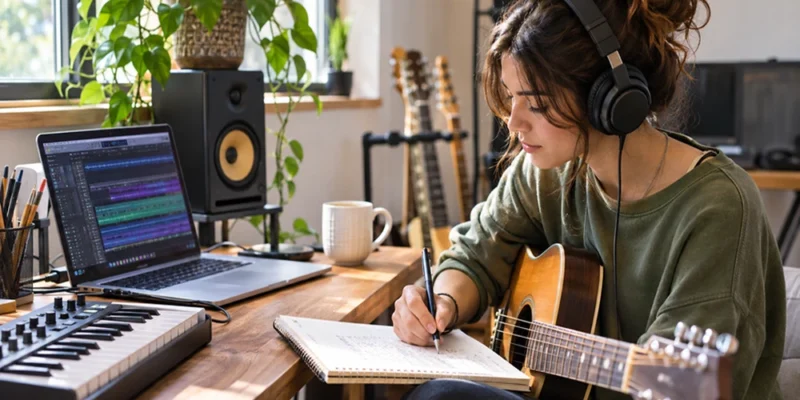
Learning music independently has never been more accessible. Aspiring musicians can explore tutorials, practice techniques, experiment with recording software, and discover new musical styles without following a traditional classroom schedule.
However, access to learning materials does not automatically create an effective learning process. Many self-taught musicians eventually encounter familiar challenges: inconsistent progress, technical limitations, difficulty applying music theory, or uncertainty about what to study next.
The solution is not necessarily to abandon independent learning. Instead, musicians can develop a structured approach that combines personal creativity with clear goals, constructive feedback, and focused skill development.
Identify Your Strengths and Learning Gaps
Before building a learning plan, musicians need an accurate understanding of their current abilities.
Someone who plays guitar by ear might have strong improvisational instincts but limited knowledge of harmony. A songwriter may create memorable melodies while struggling with arrangement or production. Similarly, an aspiring producer might understand recording software but need stronger listening and composition skills.
Identifying these differences helps musicians prioritize meaningful improvements.
Start by evaluating several areas:
- Technical ability: Can you perform consistently and comfortably?
- Music theory: Do you understand the musical ideas behind what you play or create?
- Listening skills: Can you recognize rhythms, chord changes, and musical patterns?
- Creative expression: Can you develop original musical ideas?
- Practical application: Can you record, arrange, rehearse, or perform complete pieces?
Record a short performance or finish a small musical project, then review it critically. Identify two or three weaknesses that deserve immediate attention.
This creates a starting point for focused learning rather than attempting to improve everything simultaneously.
Create a Practice Routine With Measurable Goals
Practicing regularly matters, but repetition without direction can reinforce mistakes or create unnecessary frustration.
A structured practice routine should address specific skills and provide opportunities to apply them.
For example, a guitarist working on improvisation could divide a practice session into technique, scale application, ear training, and improvisation over a backing track.
A music producer might dedicate separate sessions to sound design, arrangement, mixing, and critical listening.
Rather than setting broad goals such as “become better at music,” establish objectives that can be evaluated.
Examples include learning a complete song at a comfortable tempo, recording a clean vocal performance, or completing an arrangement using a limited selection of instruments.
Keep a simple practice journal documenting what you studied, which difficulties appeared, and what improved.
Reviewing these notes every few weeks makes progress easier to recognize and helps reveal when a learning strategy needs adjustment.
Know When to Add Structured Music Education
Independent learning encourages experimentation and allows musicians to explore their interests freely. However, it can become difficult to recognize technical mistakes or determine which advanced concepts deserve attention.
This is where structured instruction can provide additional value.
A guided learning environment can introduce progressive coursework, experienced instructors, constructive feedback, and opportunities to learn alongside other musicians.
For learners balancing music with professional or personal responsibilities, an online music college can be one option for exploring organized training in performance, songwriting, production, recording, and related disciplines without relocating for traditional campus study.
The important consideration is whether a particular learning format supports your goals.
Before choosing a program, examine its curriculum, instructor experience, feedback methods, scheduling requirements, and opportunities for practical work.
A beginner may benefit from foundational instruction, while an experienced musician might need specialized training in composition, recording, or music business.
Structured education should complement individual creativity rather than replace it.
Learn Through Feedback and Collaboration
One challenge of studying independently is the absence of regular external feedback.
Musicians may become comfortable with familiar techniques while overlooking habits that limit their development.
Constructive criticism can reveal problems that are difficult to identify during individual practice.
Seek feedback from teachers, experienced performers, fellow musicians, or trusted collaborators. Share specific recordings or compositions and ask focused questions.
For example, instead of asking whether a song sounds good, ask whether the arrangement supports the vocal melody or whether the rhythm remains consistent throughout the performance.
Collaboration also introduces musicians to unfamiliar approaches.
A songwriter working with a producer may discover new arrangement possibilities. An instrumentalist rehearsing with other performers may improve timing, musical communication, and responsiveness.
Online collaborations, local music groups, and informal recording projects can provide useful opportunities to practice these skills.
The objective is not to accept every suggestion automatically. It is to understand different perspectives and make more informed creative decisions.
Turn Musical Knowledge Into Practical Projects
Learning concepts is valuable, but applying them helps transform knowledge into usable skills.
A musician studying harmony might analyze a favorite composition and then write an original chord progression. Someone learning recording techniques could produce a short demo using a basic home setup.
Projects create opportunities to combine technical skills, creativity, and problem-solving.
Choose assignments that are challenging but achievable within a reasonable period.
Possible projects include recording a three-song demo, arranging an existing composition in a different style, collaborating on an original track, or preparing a short live performance.
Each project should have a clear outcome and completion date.
Once finished, evaluate both the result and the process. Consider which skills improved, where difficulties occurred, and what you would approach differently next time.
Over time, completed projects can also form a portfolio that demonstrates musical development more effectively than a list of practiced exercises.
Conclusion
Becoming a skilled musician requires more than collecting tutorials or accumulating practice hours. Meaningful development comes from understanding personal strengths, addressing weaknesses, applying new knowledge, and learning from experience.
Independent exploration remains an important part of musical growth, but structured goals, thoughtful feedback, and collaborative opportunities can make that exploration more productive.
By combining consistent practice with purposeful learning and real creative projects, aspiring musicians can develop a sustainable approach that supports both technical improvement and artistic individuality.










Comments